
Turf management is the agronomic care of a grass surface, built around soil condition rather than grass appearance. A professional service opens with a site assessment and soil test, produces a written programme covering nutrition, aeration, irrigation, weed and disease control, then adjusts it as the surface responds.
That opening sequence is the part most facilities skip. They engage a contractor, agree a mowing frequency, and discover two years later that nobody ever tested the soil the grass was growing in.
What Is Turf Management and Why Does It Matter for Sports Surfaces?
Grass is the visible outcome. Turf management works on what produces it: the root zone.
A sports surface has to do things a decorative lawn never does. Take studded traffic without shearing. Recover from divot damage within days. Stay firm enough to run on after rain, soft enough not to injure a player who falls. Those properties come from root depth, soil structure, thatch depth and moisture balance, none of which you can assess by looking at the field.
This is why a green field can still be a failing one. Grass that looks healthy but roots only 30mm deep will tear in sheets under load. For a facility running organised sport it is also a safety function, since sparse or uneven turf is one of the few injury risks an operator directly controls.
What Is the Difference Between Turf Management and Regular Grass Cutting – Why Do Sports Facilities in Singapore Need a Dedicated Service?
Grass cutting is one task. Turf management is a programme that includes it.
A cutting contractor mows to a set height on a set schedule and removes clippings. Nobody is measuring soil pH, tracking thatch, testing infiltration or adjusting nutrition to what the soil lacks. A turf management service works from data, typically covering soil testing and conditioning, targeted fertilisation, broadleaf and crabgrass control, fungicide and pesticide application where warranted, irrigation design and scheduling, aeration, dethatching, limestone application to correct pH, top dressing and rolling.
Singapore facilities need the dedicated version for one reason: growing conditions here never stop. Grass grows year-round, which sounds like an advantage until you count what else does. Weeds germinate continuously. Fungal disease has no cold season to suppress it. Organic matter builds into thatch faster than it decomposes. Nutrients leach out with every heavy downpour, and Singapore averages around 171 rain days a year. A mowing contract manages none of that.
What Does a Turf Management Site Assessment Involve Before a Service Plan Is Drawn Up for a Sports Facility?
A thorough assessment takes hours on site, not a walk-around. It should include:
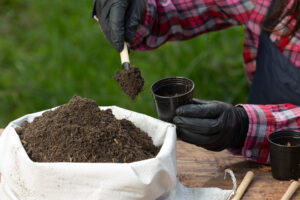
- Soil sampling and testing from several points, since one core from the centre will not represent goalmouths, wings or shaded corners. Singapore soils frequently test acidic, which locks up nutrients regardless of how much fertiliser is applied.
- Root zone inspection, showing root depth, thatch thickness, and whether a compaction layer is stopping water moving down the profile.
- Compaction measurement across the field, because compaction concentrates where traffic concentrates.
- Drainage and infiltration testing – how fast water actually moves through, and where it pools when it cannot.
- Species and coverage survey. Zoysia matrella, widely used on tropical sports surfaces, has very different requirements from Bermuda grass or the cow grass that colonises neglected fields.
- Disease, pest and weed identification by location, so treatment is targeted rather than blanket-applied.
- Usage and shade audit – hours of play per week, traffic patterns, and which areas sit in building or tree shade.
- Irrigation review for coverage, uniformity, and whether the system reaches the areas that need it.
Only then does a service plan get written. A contractor who quotes without this is pricing a guess.
What a Professional Turf Management Service Plan Covers in Singapore
BSG’s turf management service follows four stages: on-site assessment, a customised programme built from it, a service agreement setting scope and frequency, then ongoing maintenance with regular adjustment.
A sound plan specifies the nutrition programme in rates and intervals – under high rainfall, split applications at lower rates outperform infrequent heavy feeding, which largely leaches away. It sets a cultural practices calendar for aeration, dethatching, top dressing and rolling with dates and methods. It defines integrated pest and weed management with monitoring thresholds, using environmentally responsible products by default. It includes a seasonally adjusted irrigation schedule, review points for re-testing, and reporting of what was done and observed. Without records you cannot tell whether the programme worked.
Key Challenges of Turf Management in Singapore’s Tropical Climate
- No dormancy. Continuous growth means no recovery window and no natural reset. Wear accumulates all year.
- Nutrient leaching. With a long-term average near 2,113mm annually, per the Meteorological Service Singapore, soluble nutrients move out of the root zone quickly.
- Fungal pressure. Warmth, moisture and leaf wetness are close to ideal for turf disease, making mowing height and irrigation timing disease management tools.
- Rapid thatch accumulation. Fast growth produces organic matter faster than it breaks down.
- Compaction on saturated soil. Play on wet ground compacts far more severely, and Singapore fields are wet often.
- Urban shade. Buildings and mature trees leave turf weaker and slower to recover.
- Year-round weed pressure. Nothing kills off the seed bank seasonally.
How to Choose a Turf Management Service Provider in Singapore
Ask about assessment methodology before price. A provider who cannot explain how they will test your soil is selling mowing under a better name.
Check qualifications: certified practising horticulturists on staff, ISA registered arborists where tree work touches the site, and BCA registration as a landscape company as a baseline. Ask what reporting you receive and how often, how the programme changes if soil tests come back poor, and for reference sites with comparable usage rather than comparable size. Be wary of fixed programmes offered before any site visit.
FAQ: Turf Management Service Singapore
How much does turfing cost in Singapore?
Supply and installation typically runs S$6 to S$15 per square metre, depending on species and site preparation. Ongoing management is quoted separately.
Can new turf be laid over existing grass?
No. It prevents root contact with the soil and traps a decaying layer underneath. The existing surface must be removed and the soil prepared first.
How long does new turf take to establish?
Roughly three to six weeks for root establishment, and around three months to full playing strength. Early use is the most common cause of failed installations.
How often should soil be tested?
Annually at minimum for a sports surface; twice yearly under heavy use or while recovering from a known problem.
Is turf management the same as field maintenance?
No. Turf management covers grass and root zone. Field maintenance covers the field as a facility, including drainage, surface levels, goalmouths and markings. Sports facilities usually need both.
Do you offer eco-friendly turf management?
Yes. Programmes can be built around environmentally responsible products and integrated pest management, using monitoring and cultural practices to reduce chemical dependence.
If you are comparing turf management quotations, the most useful question is what the provider will measure before committing to a programme. BSG Landscape & Construction has maintained turf and landscape assets in Singapore since 2003, with in-house Certified Practising Horticulturists and ISA Registered Arborists. Arrange a site assessment.


