A commercial green wall costs roughly S$300 to S$900 per square metre to install. The ones that fail in Singapore rarely fail because somebody picked the wrong plants.
They fail because the irrigation stopped and nobody noticed until the top two rows went brown.
Green walls and indoor planting get bought as installations, then managed as afterthoughts. This covers what maintenance should include, how rental compares to owning, and the obligations attached to both.
Why Green Walls Fail in Singapore, and It Is Almost Never the Plants
A living wall is four systems stacked together: a structural frame, a growing medium, an irrigation line and the planting. Three of those are engineering.
Irrigation is where it goes wrong. One blocked dripper starves a section while the rest of the wall looks healthy, so the damage spreads before anyone reports it. Singapore pushes from both directions. Rainfall averaging around 2,113mm a year leaches nutrients from a shallow growing medium, while indoor walls sit under air-conditioning that dries them faster than owners expect.
Access is the other blind spot. A wall at three storeys needs a work-at-height procedure, not a ladder. A contractor who has not priced the access method has not priced the job.
What Green Wall Maintenance Should Actually Cover
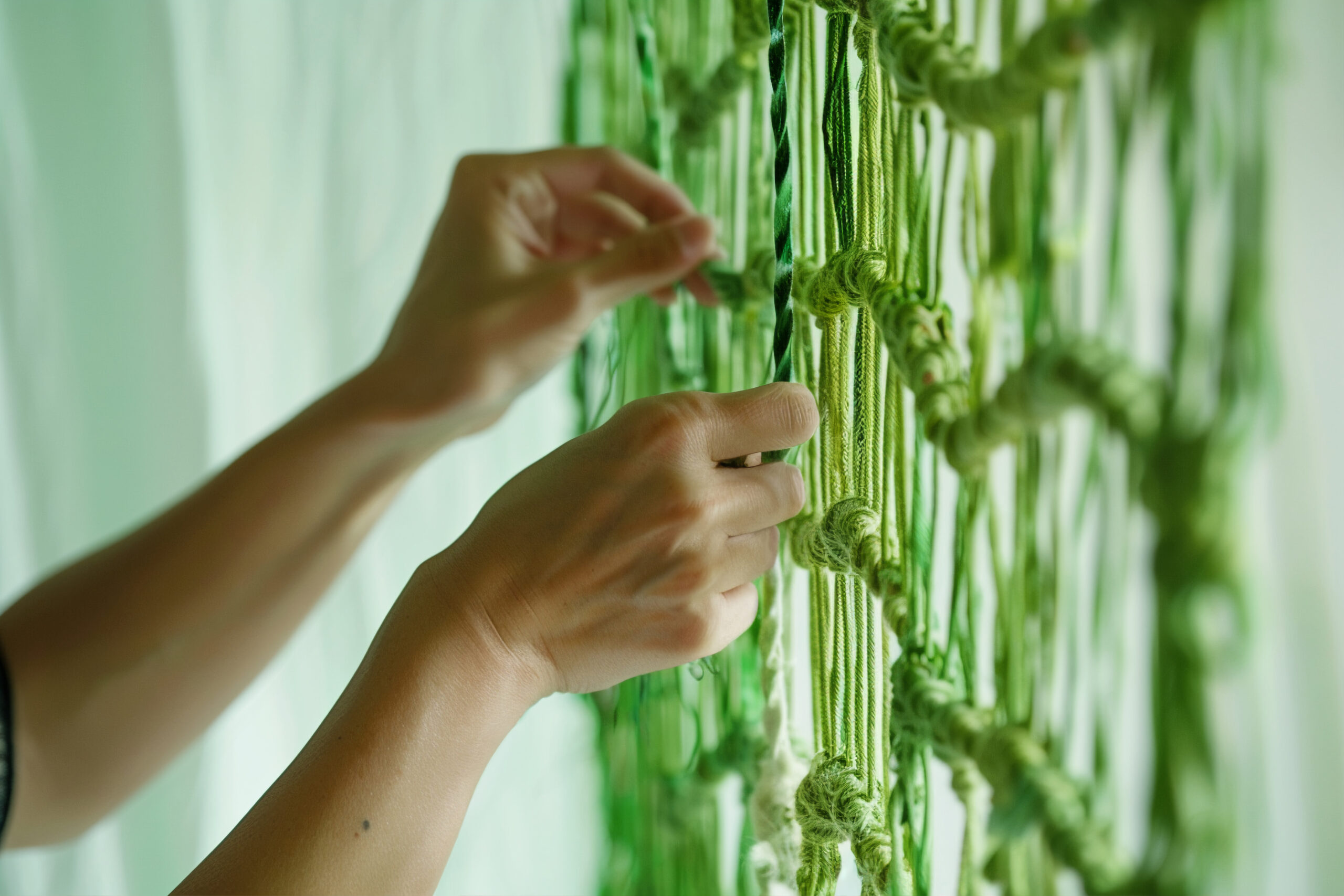
Monthly is the working minimum for a commercial living wall here. A proper scope covers:
- Zone-by-zone irrigation testing, not a visual check from the ground
- Dripper clearing, plus filter, pump and controller servicing
- Fertigation adjustment, since a shallow medium holds almost no nutrient reserve
- Pruning and thinning so upper rows stop shading out lower ones
- Pest and disease monitoring under integrated pest management
- Plant replacement, with a stated turnaround and cost basis
- Structural, waterproofing and drainage checks on frame and catchment
- A dated condition report each visit
Maintenance commonly starts around S$150 to S$300 a month, scaling with area, access difficulty and system type. The clause that matters more than the fee is who pays for replacement plants. Get it written down.
The Compliance Obligations That Rarely Appear in a Quotation
This is the part most providers skip.
If the wall was installed with support from NParks’ Skyrise Greenery Incentive Scheme, the money came with an undertaking. SGIS reimburses up to 50% of installation cost, capped at S$500 per square metre for vertical greenery and S$200 for rooftop greenery. In exchange, the installation must be maintained for at least five years. Remove it early and the reimbursement is recovered pro-rated across that period. Any significant reduction in green area needs NParks approval inside the window. A wall that dies in year two is a repayment exposure, not just an eyesore. Funding is first-come, first-served subject to availability, so confirm current status with NParks.
Planning adds a second layer. Under the LUSH programme, vertical greenery and extensive green roofs count toward Landscape Replacement Area requirements, and building owners are expected to retain that provision.
Indoors, the driver changes. SGIS does not fund indoor greenery. BCA’s Green Mark 2021 framework does credit interior planting under its health and wellbeing criteria, with density benchmarks attached. If the building holds or is chasing a rating, a half-empty atrium planter becomes a scoring problem.
Indoor Plants Rental or Buying: Which Fits a Singapore Office
Buying looks cheaper on a spreadsheet. It usually is not.
Under indoor plants rental, the plants stay the vendor’s asset. They service on a set cycle, typically fortnightly, and replace anything that declines at their cost. Singapore market rates run roughly S$18 to S$25 a month for a floor-standing specimen and S$8 to S$12 for desktop plants, with most providers setting a minimum monthly contract value.
Buying transfers three costs to you: replacing every plant that dies, the labour to water and feed them, and disposal when the fit-out changes. Offices are hostile to plants. Low light, permanent air-conditioning, long weekends with the cooling off. Attrition is normal, and under rental it is the vendor’s problem.
Rent for offices, lobbies, showrooms and short tenancies. Buy where the planting is architectural, permanent, and specified as part of the building.
What to Check Before You Sign
- Replacement terms. Who pays, how fast, and what counts as fair wear.
- Frequency in writing. Monthly for green walls, fortnightly for indoor rental, as a schedule rather than an intention.
- Irrigation competence. Ask who services the pump, filter and controller. If that is subcontracted, accountability breaks there.
- Access and safety. Work-at-height procedures and MOM-registered WSH supervision above ground level.
- Grant and planning status. Whether the installation sits inside an SGIS undertaking or counts toward a Landscape Replacement Area.
- Reporting. A dated condition report per visit is your evidence and your early warning.
FAQ: Green Wall Maintenance and Indoor Plants Rental
How often should a green wall be maintained?
Monthly at minimum for commercial installations, and fortnightly through the establishment year for walls in full sun or under constant air-conditioning.
Does indoor plants rental include replacement?
It should. Free replacement of declining plants is standard among established Singapore providers. Confirm the turnaround time, not just the principle.
Can we claim a grant for indoor plants?
No. SGIS covers rooftop and vertical greenery on buildings and excludes indoor installations. Interior planting earns credit through a Green Mark submission instead.
What happens if a grant-funded green wall is removed early?
Recovered pro-rated over the five-year undertaking period. Reductions in green area also need NParks approval within that window.
Green walls and indoor planting are small line items that behave like building systems. Specify them that way.
BSG Landscape & Construction has been a BCA-registered landscape company since 2003, with in-house Certified Practising Horticulturists, ISA Registered Arborists and MOM Registered Workplace Safety & Health Officers, and projects including the Singapore Botanic Gardens, Fusionopolis and the Singapore Flyer. Green wall systems, green roof systems and indoor plants rental sit alongside grounds, tree care and turf management under one agreement.
Request a site assessment, or explore our green wall and indoor plants rental services.