Outdoor maintenance at a Singapore commercial property covers four distinct scopes: landscape services for planting and grounds, tree care for the arboricultural assets, turf management for grass surfaces, and irrigation for the system feeding all of it. Most properties buy the first, assume the rest is included, and find out otherwise when a tree drops a limb or the lawn stops draining.
This is a checklist for facility managers who need to know what should be in scope, how the pieces relate, and what an annual contract ought to cover.
What Outdoor Maintenance at a Singapore Commercial Property Actually Involves – a Full Service Inventory
Run through this list against your current contract. Anything unticked is either being neglected or handled by someone you have not budgeted for.
Grounds and softscape
- Mowing, edging and trimming of lawns and verges
- Shrub and hedge pruning
- Weed control across beds, paving and boundaries
- Mulching and bed maintenance
- Seasonal planting and replacement of failed stock
- Litter and green waste clearance
Trees
- Inventory and condition survey
- Scheduled inspection by a certified arborist
- Pruning cycles and deadwood removal
- Pest and disease monitoring
- Felling and removal where required, with NParks approvals
- Post-storm response
Turf
- Soil testing and nutrition programme
- Aeration and dethatching
- Top dressing and levelling
- Weed, pest and disease management
- Renovation and returfing of worn areas
Irrigation and water
- System inspection and scheduling
- Sprinkler and dripline repairs
- Seasonal adjustment
- Drainage checks and clearance of inlets
Green infrastructure
- Green wall irrigation, plant replacement and structural checks
- Green roof drainage, growing medium and plant health
- Indoor plant care and rotation
Compliance and records
- Work completion records and condition reports
- Tree risk assessment documentation
- Standing water checks, since a mosquito breeding habitat on your premises attracts enforcement from the National Environment Agency
- Safe work procedures for work at height and over occupied areas
Landscape Services: What’s Included Beyond Planting, Trimming, and General Upkeep
Landscape services get equated with tidying, which undersells the scope on a commercial property. The category properly covers maintenance, construction and specialised features.
Maintenance is the visible part: lawn care, shrub trimming, fertilisation, weed control and general tree upkeep. Construction covers hardscaping such as walkways, patios and retaining walls, plus irrigation and sprinkler installation, vertical green wall systems and green roof installation. Specialised features include water features and koi pond maintenance, which need their own competencies entirely.
The reason this matters for a facility manager is coordination. Irrigation coverage has to match what is planted. Hardscape drainage has to move water away from planted areas rather than into them. Green wall systems fail on irrigation faults far more often than on plant selection. When these sit with separate vendors, the failures land in the gaps between contracts.
BSG’s landscape services cover maintenance, construction and specialised features under one agreement, alongside horticultural services, green walls, green roof systems and indoor plant rental.
Tree Pruning, Tree Cutting, and Tree Maintenance: How to Plan These as a Coordinated Annual Programme
Trees are the highest-liability asset on most commercial properties and the most commonly under-managed. They are also the scope where the three service names get confused.
Tree pruning is selective branch removal to manage structure, health and clearance. The tree stays. Tree cutting covers substantial reduction and sectional dismantling where size or proximity to buildings requires it. Tree removal takes the whole tree, including the stump.
Planned as an annual programme, the sequence runs: baseline inventory and condition survey at the start; urgent defect works immediately after; planned pruning cycles staged through the year, with fast-growing species like angsana on shorter intervals than slow growers like tembusu; a mid-year re-inspection of flagged trees; and a pre-monsoon check ahead of the wetter November to January phase.
Two regulatory points to build into the plan. Trees with a girth exceeding one metre inside a Tree Conservation Area or on vacant land require written approval from the Commissioner of Parks & Recreation before cutting, with a fine of up to S$50,000 under the Parks and Trees Act 2005 for proceeding without it. Check your site against the boundary on NParks’ TreesSG map. And approval lead times need to sit in the programme, not be discovered when the works date arrives.
The documentation is the other half. Dated inspection reports by certified arborists are what evidence reasonable care if a tree ever causes injury or damage.
Turf Management: Why It Sits Outside General Landscape Services and Needs Its Own Dedicated Plan
Mowing is a landscape service. Turf management is agronomy, and the difference is that one manages appearance while the other manages the root zone.
A general grounds contract cuts grass to a height on a schedule. A turf management plan tests the soil, corrects pH, sets nutrition from the test results, relieves compaction through aeration, removes thatch before it blocks water movement, and adjusts irrigation to what the surface actually needs.
Properties that need the dedicated version are those with sports pitches, event lawns, high-traffic recreational areas, or any feature turf where appearance is part of the asset. For sports surfaces specifically, field maintenance goes further again, adding drainage performance, surface levels, goalmouth repair and line marking.
Singapore’s climate is the reason this cannot be an afterthought. Grass grows year-round with no dormant season, so wear accumulates continuously. Rainfall averaging around 2,113mm annually leaches nutrients out of the root zone. Constant humidity drives fungal pressure and builds thatch faster than it decomposes. A mowing contract addresses none of it, and the failure shows up as waterlogging and thinning turf two years in.
Choosing a Landscape Contractor in Singapore That Handles All of the Above Under One Agreement
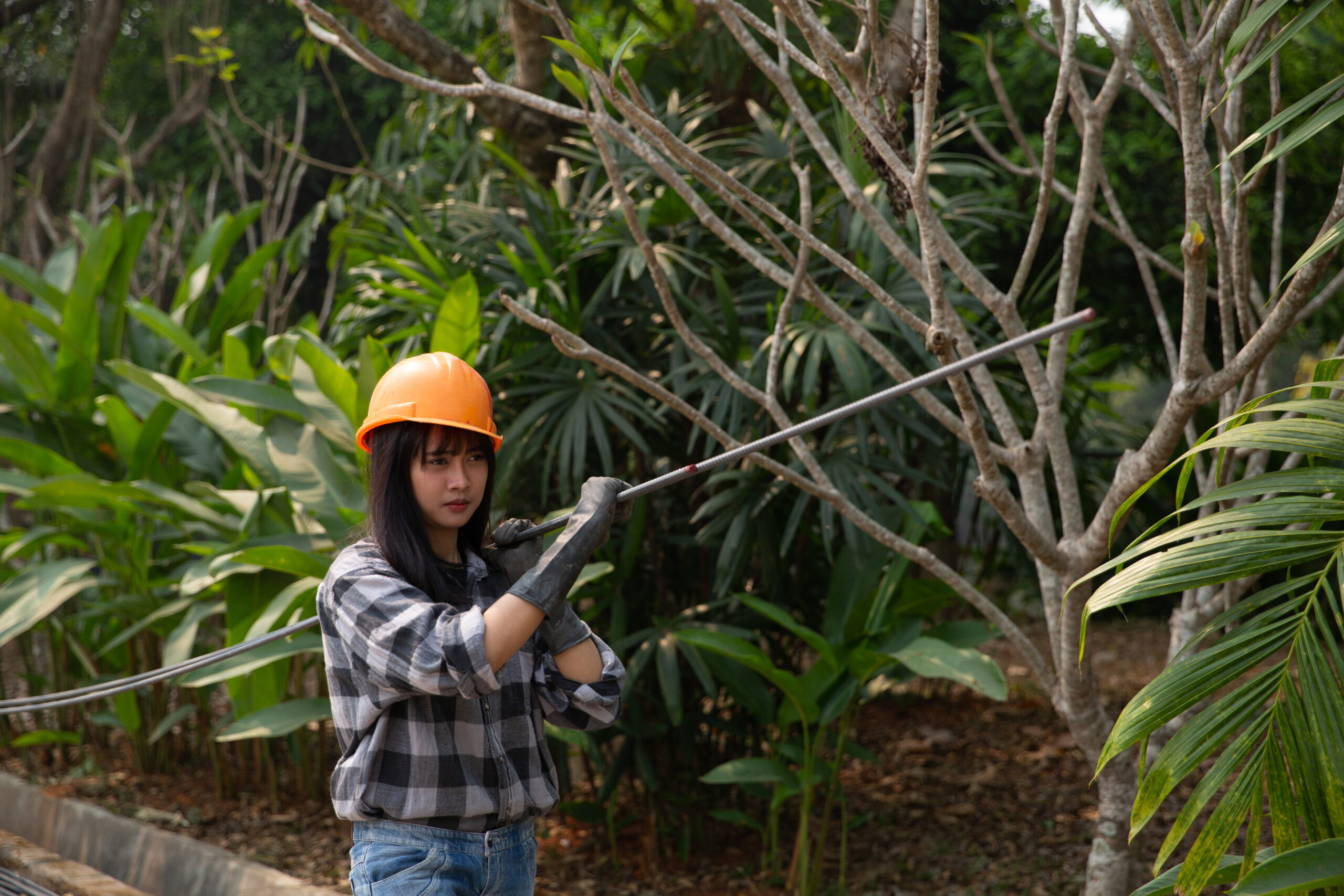
The vendor-count problem is real. Four contractors covering grounds, trees, turf and irrigation means four schedules, four invoices and nobody accountable when the turf thins under a tree that was never pruned.
What to check before appointing:
BCA registration. Verifiable through the BCA directory, and generally a prerequisite for public sector and institutional work.
Qualified personnel in-house. ISA Registered or Certified Arborists for tree work, Certified Practising Horticulturists for planting and turf, MOM Registered Workplace Safety & Health Officers for site safety. Ask which functions are subcontracted, because that is where accountability breaks.
Insurance. Public liability and workers’ compensation, with certificates produced on request.
Regulatory competence. They should raise NParks girth and Tree Conservation Area requirements before you do.
Written scope with frequencies. A single monthly figure with no schedule attached is unenforceable.
Reporting. A record of works completed and conditions observed, delivered on a set cycle.
Reference sites. Comparable property type and scale, not just comparable area.
BSG Landscape & Construction has been a BCA-registered landscape company since 2003, working with town councils, educational institutions and tourist attractions across Singapore, and delivers grounds, trees, turf, irrigation and green infrastructure under a single agreement.
How to Structure an Annual Outdoor Maintenance Contract That Covers Every Scope Area
Build the contract in five parts.
- Scope schedule by area. List each scope – grounds, trees, turf, irrigation, green infrastructure – with the specific tasks under each. Vagueness here is what produces variation orders later.
- Frequency table. Weekly or fortnightly for mowing, litter, irrigation checks and visual inspection. Monthly for shrub pruning, fertilising and weed management. Quarterly for turf aeration and irrigation servicing. Half-yearly or annually for tree inspection and pruning cycles, soil testing, dethatching and contract review.
- Exclusions, stated explicitly. Tree felling, major replanting, irrigation replacement, storm damage beyond a threshold and hardscape repairs are commonly outside the base fee. Listing them prevents the argument.
- Response times. Contractual, not informal. Storm damage and fallen limbs, irrigation failure, drainage blockage and standing water each need a defined response window. These are the incidents that test a contract.
- Reporting and review. A works record and condition report on a set cycle, plus an annual review comparing site condition against the previous baseline. The review is what tells you whether the spend bought improvement or just activity.
One budgeting note: hold a contingency for tree works. Tree removal and post-storm response are the line items that blow annual budgets, and they arrive without warning.
FAQ: Landscape Services, Tree Care, and Turf Management – Questions From Singapore Facility Managers
What should an annual outdoor maintenance contract cost?
It depends entirely on site area, planting density, tree count and turf type. As reference points, natural grass sports pitches run roughly S$30,000 to S$50,000 a year, artificial turf S$15,000 to S$25,000, and tree pruning S$100 to S$1,500 per tree.
Is turf management included in general landscape maintenance?
Usually not. General maintenance covers mowing. Turf management is a separate agronomic scope covering soil testing, nutrition, aeration and dethatching, and it needs to be specified.
How often should trees on a commercial property be inspected?
At least annually for trees over occupied areas, more frequently where defects are known, and after any significant storm.
Do we need NParks approval to cut trees on our own property?
If the girth exceeds one metre and the site is within a Tree Conservation Area or is vacant land, yes. Heritage Trees are protected regardless of location.
Can one contractor handle every scope?
Yes, where the firm carries qualified staff for each discipline in-house. The benefit is that one party sees the whole site, so related problems get connected rather than passed between vendors.
What documentation should we keep?
Works completion records, condition reports, tree inspection reports with dates and recommendations, NParks approvals, and insurance certificates. This file is your evidence of reasonable care.
Who is liable if a tree on our property causes damage?
Generally the landowner or managing body. Documented inspection and maintenance by qualified arborists is the practical defence.
If you are reviewing an outdoor maintenance contract, start by checking the scope list at the top of this article against what you are actually paying for. The gaps are usually in trees and turf.
BSG Landscape & Construction has maintained commercial and institutional properties across Singapore since 2003 as a BCA-registered landscape company, with in-house ISA Registered Arborists, Certified Practising Horticulturists and MOM Registered Workplace Safety & Health Officers.
Request a site assessment or explore our landscape services, tree care and turf management.