Three services, three different outcomes. Tree pruning removes selected branches to improve a tree’s structure, health and safety while keeping the tree. Tree cutting is the broader operational term covering pruning, sectional cutting and felling, usually where size or hazard has to be reduced. Tree removal takes the whole tree out, including stump treatment, and is the last option rather than the default one.
Choosing between them is a diagnosis, not a preference. On a commercial property the decision should follow an assessment of the tree’s condition and the risk it presents, because getting it wrong costs either a healthy tree or a liability claim.
What “Tree Maintenance” Actually Means as a Service Category in Singapore
Tree maintenance is the ongoing management of trees as long-lived assets on a property. It sits alongside building maintenance in the same way: scheduled inspection, planned intervention, and reactive response when something fails.
For a Singapore commercial or institutional site, the category covers inspection and condition monitoring, pruning on a defined cycle, deadwood removal, pest and disease management, structural support where a tree warrants retention, emergency response to storm damage, and felling and replacement when a tree reaches the end of its safe life. Regulatory handling sits inside it too, since mature trees frequently need NParks approval before any cutting.
The distinction that matters is between maintenance and reaction. A property with a maintenance programme has trees inspected on a schedule and problems addressed while they are still small. A property without one calls a contractor after a limb comes down, which is more expensive and arrives after the incident it should have prevented.
What Is the Difference Between Tree Pruning, Tree Cutting, and Tree Removal – and When Should Each Service Be Used?
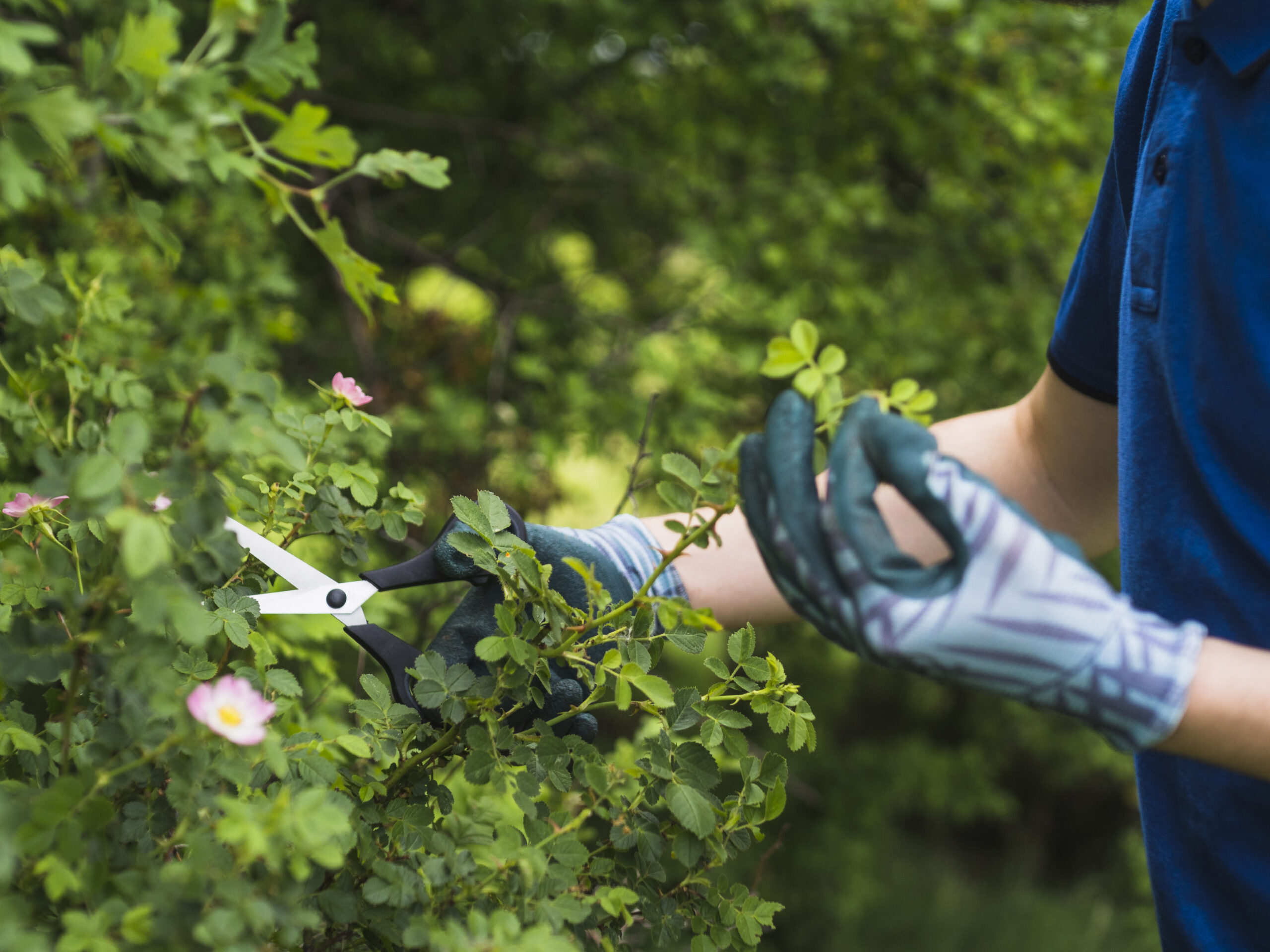
Tree pruning is selective removal of branches, buds or roots to shape growth and manage health and safety. The tree stays and is expected to improve. Singapore practice uses three techniques: crown thinning to open a dense canopy, crown raising to lift lower branches for clearance, and crown reduction to shorten the crown while keeping natural form.
Use it when: the tree is structurally sound but has deadwood, is encroaching on buildings or services, has an overly dense crown, or carries long overextended limbs. Pruning is the default intervention for a healthy tree and should be the most frequent service on any site.
Tree cutting covers the wider operational work, from substantial cutting back through sectional dismantling. On constrained sites, large limbs come down in controlled sections under rigging rather than being felled, because there is nowhere for them to fall.
Use it when: size reduction beyond routine pruning is needed, when a tree has to be dismantled in sections due to proximity to structures, or when clearance is required for construction or access. See tree cutting services for scope.
Tree removal takes the entire tree, including stump grinding or treatment and root management where required.
Use it when: the tree is dead or in irreversible decline; structural defects make failure likely and cannot be mitigated by pruning; root plate failure has caused a lean; disease presents a risk to surrounding trees, as with Fusarium wilt in angsana; roots are causing structural damage that cannot be managed; or development requires clearance. Tree removal should follow an assessment, not a complaint.
A practical hierarchy: prune if you can, cut back if pruning is not enough, remove only when retention cannot be made safe. Removal is permanent and a mature tree cannot be replaced on any useful timescale. It is also the option most likely to require NParks approval, with a fine of up to S$50,000 under the Parks and Trees Act 2005 for cutting a protected tree without it.
Tree Risk Assessment: The Foundation of Any Structured Tree Maintenance Programme
Every decision above depends on knowing the condition of the tree, which is what a risk assessment establishes.
A structured assessment evaluates three things together: the likelihood of failure, the likelihood of the failed part striking a target, and the consequence if it does. A large defective limb over a car park scores very differently from an identical limb over a boundary hedge, and the response should differ accordingly.
Assessment looks at the whole tree: the root plate and soil for movement, decay or compaction; the trunk for cavities, cracks, fungal fruiting bodies and included bark; the main unions for weak attachments; and the crown for deadwood, dieback and overextended limbs. Then the site context – what sits beneath the tree and how often people are there.
The recognised methodology internationally is the ISA Tree Risk Assessment Qualification framework, and NParks’ Centre for Urban Greenery and Ecology maintains a public listing of ISA TRAQ credential holders in Singapore, which is a useful way to verify who is actually qualified to produce this work.
Frequency depends on exposure. Trees over high-use areas warrant inspection at least annually. Trees with known defects need shorter intervals. Any tree should be inspected after a significant storm.
Which Singapore Contractors Offer Scheduled Tree Maintenance Services That Include Risk Assessment Reports for Liability Purposes?
This matters because the report is the evidence. If a tree on your property causes injury or damage, the question is whether the owner or managing body took reasonable care. A file of dated inspection reports by qualified arborists, with recommendations and records of the works carried out, is what answers that question. A verbal assurance from a gardening crew is not.
What a usable programme includes: a tree inventory with each tree tagged, located, and recorded by species, size and condition; scheduled inspections by certified arborists at intervals set by exposure; written condition reports with defects, risk ratings and recommended actions; a prioritised works schedule separating urgent items from planned cycle work; execution of pruning, cutting or removal by the same accountable party; regulatory handling of NParks applications where girth and location require them; post-storm response with defined callout terms; and a maintained record file.
BSG Landscape & Construction provides scheduled tree maintenance for commercial and institutional properties in Singapore, with in-house ISA Registered Arborists, Certified Practising Horticulturists and MOM Registered Workplace Safety & Health Officers, as a BCA-registered landscape company operating since 2003. Assessment, reporting, works and NParks coordination sit with one party, which is what makes the record coherent. See our tree pruning services or project record.
How Scheduled Tree Maintenance Programmes Are Structured for Commercial and Institutional Properties
Programmes are usually built in three layers.
The baseline survey, done once at the start. Every tree inventoried, assessed and rated. This produces the asset register everything else works from, and it is where a property typically discovers it has more trees, and more problems, than assumed.
The planned cycle, running annually. Inspection at set intervals, pruning cycles by species and location, deadwood removal, seasonal pest and disease monitoring, and a defined budget. Fast-growing species like angsana need more frequent attention than slow growers like tembusu, so a good programme is species-aware rather than uniform.
The reactive layer, on call. Storm damage, sudden limb failure, trees flagged by residents or staff. Response times should be contractual, not informal.
Ownership type shapes the emphasis. Town councils and MCSTs prioritise public safety and resident complaints, so inspection frequency and response times dominate. Schools focus on areas of child activity. Commercial buildings weight frontage appearance alongside car park and walkway safety.
What a 12-Month Tree Maintenance Plan Looks Like for a Singapore Commercial Site
Singapore has no dormant season, so the calendar is driven by rainfall and site usage rather than growth cycles.
Month 1 – Baseline survey and inventory. Full assessment, tagging, condition rating, risk prioritisation. Urgent defects addressed immediately.
Months 2–3 – Priority works. Deadwood removal, reduction of hazardous limbs, and any NParks applications initiated for trees requiring approval. Best executed in the drier February–March window where the calendar allows, since access and wound sealing both benefit.
Months 4–6 – Planned pruning cycle, phase one. Fast-growing species and trees over high-use areas. Clearance pruning from buildings, lighting and access routes.
Months 7–8 – Mid-year inspection. Re-check of previously flagged trees, pest and disease monitoring, irrigation and soil condition review around significant specimens.
Months 9–10 – Planned pruning cycle, phase two. Remaining trees, slower-growing species, boundary and perimeter trees.
Months 11–12 – Monsoon readiness and review. Pre-monsoon inspection of high-risk trees ahead of the wetter November–January phase, clearance of drainage around root zones, then annual review comparing condition against the baseline and setting next year’s scope and budget.
Throughout – reactive response. Post-storm inspections and callouts on defined response times.
The review at month twelve is the part most programmes skip and the part that proves value. Comparing condition ratings year on year is what shows whether the money is buying improvement or just activity.
FAQ: Tree Maintenance Services Singapore – Pruning, Cutting, Removal, Risk Reports, and Scheduling
How much does tree maintenance cost in Singapore?
Pruning typically runs S$100 to S$1,500 per tree depending on size and access. Cutting and removal range from around S$300 for medium trees to S$5,000 and above for large removals with rigging. Programme pricing is normally annual against a defined tree inventory.
How often should commercial property trees be inspected?
At least annually for trees over occupied areas, more frequently where defects are known, and after any significant storm.
Do I need a tree risk assessment report?
It is not universally mandated, but for any property with mature trees over people or vehicles it is the practical evidence of reasonable care, and it is what informs sensible spending decisions.
Can pruning save a tree that looks like it needs removal?
Often, yes. Deadwood, dieback and overextended limbs are all correctable. Root plate failure, advanced decay in the trunk and irreversible decline generally are not.
Do all three services need NParks approval?
Approval requirements turn on girth and location rather than the service name. Trees over one metre girth within a Tree Conservation Area or on vacant land require written approval before cutting, and Heritage Trees are separately protected.
Who should hold the tree inventory?
The property owner or managing body. It is your asset register. Contractors should maintain and update it, but you should hold a copy independent of any single contractor.
What happens if a tree fails and we have no records?
You lose the clearest evidence that maintenance was being carried out. That is the practical reason to keep dated inspection reports on file.
If your property has mature trees and no inventory, the first job is finding out what you actually have and what condition it is in. Everything else follows from that.
BSG Landscape & Construction has provided tree care across Singapore since 2003 for town councils, educational institutions and tourist attractions, with in-house ISA Registered Arborists and MOM Registered Workplace Safety & Health Officers.
Arrange a tree survey or read more about our tree pruning services.